More Stories

Monday, November 23, 2026

Choose your favorite pair of shoes.

by


We all have that one favorite pair of shoes we reach for without thinking twice. Whether you love towering heels or soft, comfy sneakers, your choice says a lot about who you are. Take a quick look at the image, pick your favorite number, and let’s reveal your true personality!


The Pink High Heels: Vibrant & Confident

If you choose the bright pink high heels, you are someone who loves to stand out! You bring energy, charm, and positivity into every room you step into. You believe that life is

I never knew this before 😱😱😱👇👇👇

by


You open the refrigerator, reach for a carton of eggs, and suddenly hesitate when you notice several numbers printed across the side. One may say “Best By,” another may begin with the letter “P,” and somewhere nearby there may be a mysterious three-digit number. For many shoppers, those markings look like expiration warnings, but they do not all mean the same thing. On many U.S. egg cartons, the three-digit number is actually the pack date, showing the day of the year the eggs were processed and placed into the carton. The system runs from 001 through 365, with 001 representing January 1. For example, 032 represents February 1, while 198 corresponds to July 17 in a non-leap year. Understanding that small code can make grocery shopping and refrigerator organization much easier.

The letter-and-number markings can reveal other information as well. A code beginning with “P” generally identifies the processing or grading plant, while labels such as “Sell By,” “Best By,” and “Best Before” serve different purposes. A sell-by date mainly helps stores manage inventory, while a best-by date usually relates more closely to expected quality. That means reaching the printed date does not automatically tell you whether an egg has suddenly become unsafe. The three-digit pack code can help you compare two cartons or decide which eggs to use first, but it should never replace proper storage and food-safety habits. And that is where the detail many shoppers overlook becomes far more important than the date itself.


According to USDA guidance, raw shell eggs generally keep for about three to five weeks when properly refrigerated at 40°F (4°C) or below. Keeping them in their original carton on an interior refrigerator shelf helps protect them from temperature changes and damage. Freshness, however, is not the same as safety. The familiar water-float test may indicate that an egg has developed a larger air cell as it ages, but it cannot prove that the egg is free of bacteria such as Salmonella. Unlike an attorney reviewing an estate, a court examining evidence, or an insurance company assessing a claim, shoppers cannot determine food safety from one clue alone. A carton code is information, not a guarantee—just as a mortgage document or investment statement serves a different purpose from a safety inspection. Cracked or heavily contaminated shells should be avoided, and hands, utensils, and counters should be cleaned after contact with raw eggs to reduce cross-contamination.

Cooking and storage after preparation matter just as much. FDA guidance recommends cooking eggs until both the whites and yolks are firm, while cooked egg dishes generally keep for about three to four days in the refrigerator. Hard-cooked eggs can usually be refrigerated for about one week. The useful takeaway is not to fear every date printed on a carton, but to understand what each marking actually represents. Use the pack date to compare freshness, pay attention to storage conditions, keep eggs consistently cold, and handle raw shells carefully. If an egg is badly cracked, heavily contaminated, or has spent too long at an unsafe temperature, throwing it away is the safer choice. Once those carton codes make sense, a quick glance at the package becomes useful information instead of another confusing grocery-store mystery.

JOKE OF THE DAY: 👩‍🦱👩‍🦰👱‍♀️ Three women are sitting in a beauty parlor, chatting about their husbands. The first woman sighs and says, "Last night, my husband told me he was going to his office. But when I called, they said he wasn’t there!" The second woman shakes her head and adds, "Same here! My husband said he was heading to his brother’s house, but when I called, he wasn’t there either." The third woman smiles confidently and says, "I always know exactly where my husband is." The other two women look at her in disbelief and exclaim....👇👇 Voir moins

by


Three women sat side by side in a cozy beauty parlor, hair wrapped in towels, the soft hum of dryers filling the air. As stylists worked behind them, the conversation naturally drifted to husbands.

The first woman let out a tired sigh and said,
“Last night my husband told me he was staying late at the office. But when I called his workplace to check in… they said he never showed up.”

The second woman shook her head in sympathy.
“You’re not alone. Mine said he was going to spend the evening at his brother’s house. So I called over there—and guess what? He wasn’t there either.”

Both women turned to the third, who sat calmly, smiling to herself.

“Well,” she said confidently, “I always know exactly where my husband is.”

The other two stared at her in disbelief.
“That’s impossible!” one exclaimed.
“He must have you completely fooled,” said the other.

The third woman chuckled softly and replied,
“Oh no… not at all. I’m a widow.”

LOL!

Hope that gave you a good laugh 😄
Here’s another one to keep the smiles coming:


Four married men went fishing together early one Saturday morning. As they cast their lines into the water, the conversation turned to what each of them had sacrificed to be there.

The first man sighed dramatically.
“You have no idea what I had to promise my wife to come fishing today. I told her I’d paint the entire house this weekend.”

The others nodded in understanding.

The second man shook his head.
“That’s nothing. I promised my wife I’d build her a brand-new deck by the pool. She’s been asking for it for years.”

The third man raised his eyebrows and added,
“You guys had it easy. I promised my wife I’d completely remodel the kitchen—cabinets, counters, everything.”

They all groaned in sympathy.

Then they noticed the fourth man, quietly fishing with a grin on his face.

“Hey,” one of them asked, “you’ve been awfully quiet. What did you have to promise your wife to come out here?”

The fourth man smiled and said,
“Nothing much. I just set my alarm for 5:30 this morning. When it went off, I turned it off, gently nudged my wife, and asked, ‘Fishing… or something else?’”

The men leaned in.

“She rolled over and said, ‘Put on a sweater.’”

The group burst into laughter.

Moral of the story:
Sometimes, timing and the right question can save you a whole lot of work 😄

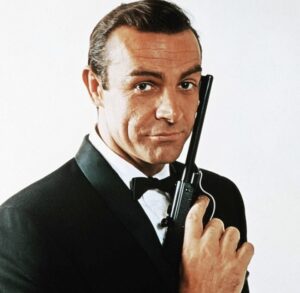
Spotted walking through New York, this legendary actor appears noticeably frail at 87 years old 😢📸 Once celebrated for his charisma, strength, and iconic film roles, fans are struck by how much time has changed even one of Hollywood’s most enduring stars 🌟.Recognize him? 👀👇The answer! 📸⬇️⬇️

by


Sean Connery may be gone, but the image of him still stops people cold. A new tribute portrait set in modern Manhattan has reignited the same old feeling: awe, nostalgia, and a painful reminder that some stars never really leave us. His face still carries the weight of an era cinema has not been able to recreate… Continues…

Connery’s legacy began with Dr. No in 1962, where he turned James Bond into something sharper, cooler, and far more dangerous than audiences had imagined. Across seven Bond films, he built the role into a global standard, mixing elegance, menace, and dry wit with effortless control.

But his greatness was never limited to espionage. In The Untouchables, he won an Oscar by playing a hardened cop with grit and moral force, proving he could move far beyond the tuxedo and martini. That range is why these tribute images resonate so deeply: they do not suggest he is back, only that his presence still lingers in the memory of film lovers everywhere.

Sunday, November 22, 2026

My daughter had that stored in her room, which is…it worries me a little.” What is it?…see more

by


Try Web Tools

Probar web apps
I completely understand that you feel worried or shocked after finding something unexpected. Your statement matches a very common viral post on social media like Facebook where parents comment:“I found this in my daughter’s room and she said it was a    USB drive . What is it? Because I can tell it’s not that…”. 
Since I can’t see any attached images, I don’t know for sure what object was found . In these kinds of viral  internet situations , the object is usually one of two things:

Check Comment

by


My Military Husband Passed Away Two Weeks Ago. When I Visited His Grave Today, I Found Something Strange on His Gravestone—and What I Discovered Left Me Terrified


Two weeks ago, my world fell apart.


My husband, Daniel, was a military man who had dedicated years of his life to serving his country. He was brave, disciplined, and fiercely protective of the people he loved. To everyone who knew him, he was the kind of man who would run toward danger while others searched for safety.


To me, he was everything.


He was the person I turned to when life became overwhelming, the voice that calmed my fears in the middle of the night, and the man who could make me laugh even on my worst days. He was my best friend, my partner, and the person I had imagined growing old beside.


Now, he was gone.


His death happened so suddenly that even two weeks later, I still struggled to accept it. Some mornings, I woke up expecting to hear him moving around the house. Sometimes, I reached for my phone to send him a message before remembering that he would never answer again.


The silence was the hardest part.


His boots were still near the front door. His favorite mug remained in the kitchen cabinet. A jacket he often wore was hanging where he had left it, and I couldn't bring myself to move it. Every little thing reminded me of him, and every reminder brought back the painful truth that I would never see him walk through the door again.


Friends and family told me that grief takes time. They encouraged me to rest, eat properly, and allow myself to heal. I appreciated their concern, but none of their words could explain how to live in a world where the person I loved most was suddenly missing.


So, every day, I tried to take things one step at a time.


Then, exactly two weeks after his funeral, I decided to visit his grave.


I needed to feel close to him. I wanted to speak to him, even if he couldn't answer. Perhaps I simply needed a quiet place where I could cry without pretending to be strong for everyone else.


I never imagined that visit would leave me with even more questions.


When I arrived at the cemetery, the sky was gray, and a cold breeze moved through the trees. The grounds were peaceful, with rows of gravestones stretching across the carefully maintained lawn. A few people stood near distant graves, but most of the cemetery was quiet.


I walked slowly along the path, carrying a small bouquet of white flowers.


Daniel had always liked simple things. He never cared much for expensive gifts or elaborate celebrations. He appreciated honesty, loyalty, and the little moments that made life meaningful. I chose the flowers because they reminded me of the calm, gentle side of him that strangers rarely saw.


As I approached his grave, my steps slowed.


For a moment, I simply stood there.


His name was engraved on the stone, along with the dates that now divided my life into a before and an after. Seeing those dates together still felt unreal. They looked so permanent, so final, and so unfair.


I knelt down and placed the flowers near the base of the gravestone.


"I'm here, Daniel," I whispered.


My voice trembled.


"I miss you so much. I don't know how I'm supposed to do this without you."


I wiped my eyes and tried to gather myself. I had brought a few things I wanted to tell him about—small details from the past several days, conversations we used to have, and memories I was afraid I might someday forget.


For several minutes, I remained beside him, speaking softly into the stillness.


Then I noticed something unusual.


At first, I thought it was simply a piece of debris that had blown onto the grave. I leaned forward, expecting to find a fallen leaf or a small object someone had accidentally dropped.


But when I looked more closely, I realized that something had been deliberately placed there.


I froze.


There were objects on the gravestone that I had never seen before.


They weren't part of the flowers I had brought. They weren't decorations I remembered seeing at the funeral, either. Someone had apparently visited Daniel's grave after the service and left something behind.


I stared at the objects, trying to understand what I was looking at.


My first reaction was confusion.


Who had been here?


Why hadn't anyone told me?


And why would someone leave these particular things on my husband's gravestone?


I looked around the cemetery, hoping I might see someone nearby who could explain. But there was no one close enough to ask. The distant visitors were occupied with their own loved ones, and the paths around Daniel's grave were empty.


Suddenly, the peaceful atmosphere felt different.


I had spent the past two weeks trying to make sense of Daniel's death. I had gone through the arrangements, spoken to relatives, answered messages, and listened to stories from people who had served alongside him. I thought I knew the important details of his life.


Yet now, standing beside his grave, I felt as though I had stumbled upon something I didn't understand.


I took a step closer.


The objects seemed ordinary enough on their own, but their placement made me uneasy. They looked intentional, as though someone had wanted them to be noticed.


I couldn't shake the feeling that there might be a reason they had been left there.


My mind began racing through possibilities.


Perhaps a fellow service member had visited and left a personal tribute. Maybe someone from Daniel's unit had a tradition I had never heard about. It was possible that the objects carried a symbolic meaning known to people who had served with him.


That explanation should have comforted me.


Instead, I found myself wondering why nobody had mentioned such a tradition before.


Daniel had shared many stories about his military career, but there were parts of his service he rarely discussed. Sometimes, when I asked about a particular assignment, he would give me a brief answer and change the subject. I had never pressured him. I understood that some experiences were difficult to talk about, and I respected his privacy.


But grief has a way of turning unanswered questions into something much larger.


Standing at his grave, I began remembering those conversations.


There had been moments when he seemed troubled after receiving a phone call. There were names he mentioned only occasionally and stories he stopped telling whenever someone unfamiliar entered the room. At the time, I had assumed these things were connected to the ordinary demands of military life.


Now, I wondered whether I had overlooked something important.


Was it possible that the objects had been left by someone who knew Daniel in a way I didn't?


Or was I allowing my grief to turn an unexplained discovery into something frightening?


I tried to calm myself.


There could be a simple explanation. Cemeteries are places where people leave tokens of remembrance, and those tokens can carry deeply personal meanings. Without knowing who had placed the objects there or why, I had no way of interpreting them with confidence.


Still, I couldn't bring myself to ignore them.


I took out my phone and photographed the gravestone.


My hands were shaking slightly, and I had to take a second picture because the first one wasn't clear. I wanted to remember exactly what I had found, partly because I hoped someone might recognize the objects and explain their significance.


I also wanted evidence of what I had seen.


That thought surprised me.


Evidence?


Why was I already thinking that way?


I had no reason to believe anyone had done anything wrong. I hadn't witnessed a threat, received a warning, or discovered anything that proved Daniel's death was connected to the objects. All I had was a discovery I couldn't explain and a mind exhausted by sorrow.


But fear doesn't always wait for facts.


I looked at the gravestone one more time.


"I'm going to find out what this means," I whispered.


I wasn't sure whether I was speaking to Daniel or trying to reassure myself.


Before leaving, I carefully examined the surrounding area. I didn't want to disturb anything that might belong to another visitor, and I didn't want to make assumptions about something I didn't understand.


Then I picked up my bag and walked back toward the cemetery entrance.


The entire drive home, I kept thinking about the photograph on my phone.


I enlarged it at a red light, then immediately put the phone away when the traffic began moving. Every time I glanced at the image, I felt the same mixture of confusion and uneasiness.


I wanted an explanation.


I wanted someone to tell me that the objects were harmless, that they were part of a familiar military tradition, or that another grieving person had left them as a gesture of respect.


Most of all, I wanted to stop imagining possibilities.


When I got home, I sat at the kitchen table and looked through the photographs again. I considered calling Daniel's closest friend from the military, but I hesitated. I didn't want to alarm anyone unnecessarily, especially when I couldn't even explain what had frightened me.


Then I remembered something Daniel had once told me.


He had said that people sometimes misunderstood the traditions and symbols associated with military service. A gesture that appeared strange to an outsider might carry a powerful meaning for someone who had served.


At the time, I hadn't thought much about it.


Now, his words returned to me with surprising clarity.


Could that be what I was seeing?


I began searching for explanations, but the more I looked, the less certain I became. Similar-looking objects can have different meanings depending on their context, the military branch involved, local customs, and the intentions of the person who left them.


I realized that guessing from a photograph could easily lead me in the wrong direction.


I needed to ask someone who actually knew.


Finally, I opened my messages and found the contact information for one of Daniel's longtime military friends, a man named Michael. He had attended the funeral and stayed afterward to offer his condolences. I remembered that he and Daniel had served together for several years.


I typed a message, deleted it, and tried again.


"Hi, Michael. I'm sorry to bother you. I visited Daniel's grave today and found some unusual objects on his gravestone. I took a picture, but I don't understand what they mean. Have you ever seen anything like this?"


I attached the photograph and pressed send.


Then I waited.


A few minutes passed.


I tried to distract myself by washing a cup and straightening the flowers on the kitchen counter. But my attention kept returning to the phone lying beside me.


When it finally vibrated, I grabbed it almost immediately.


Michael had replied.


"Where exactly did you find these?"


I read the message twice.


His question wasn't what I had expected. I thought he would simply tell me whether the objects were familiar or explain their meaning.


Instead, he wanted to know precisely where they had been placed.


I answered that they were on Daniel's gravestone when I arrived that afternoon.


The typing indicator appeared.


Then disappeared.


Then appeared again.


Finally, another message arrived.


"I need to ask you something. Did anyone else see them before you took the picture?"


My stomach tightened.


I told him that I hadn't noticed anyone near the grave and that I didn't know who had left them.


For a while, there was no response.


I stared at the screen, wondering whether I should call him. I didn't want to jump to conclusions, but his questions were making me increasingly uncomfortable.


Eventually, I sent another message.


"Michael, please tell me if you know something. I'm already struggling with losing Daniel. I don't want to imagine things, but I need to understand what's happening."


This time, he replied almost immediately.


"I don't want to frighten you. I just don't want you to assume anything until we've spoken. Can you call me?"


I called.


He answered after the first ring.


For a moment, neither of us spoke. I could hear faint background noise on his end, but his voice was serious when he finally greeted me.


I asked him directly what the objects meant.


He took a breath.


"First, I need you to understand something," he said. "Not everything left at a military grave has an official meaning. Some things are personal tributes. Some are traditions shared by a particular group. And sometimes, people leave objects for reasons that have nothing to do with the military."


I listened carefully.


He continued, explaining that he couldn't identify the purpose of the objects with certainty from the photograph alone. He didn't want to give me an answer that might be wrong, especially when I was already dealing with so much pain.


I appreciated his honesty, but I still felt unsettled.


"Then why did you ask whether anyone else had seen them?" I asked.


There was a pause.


"Because I want to understand the circumstances," he replied. "Whoever left them may have intended them as a tribute, or there may be a personal story behind them. We shouldn't assume the worst."


His answer was reasonable.


And yet, I couldn't ignore the feeling that he was choosing his words carefully.


I asked whether he remembered Daniel ever mentioning anything connected to the objects.


Michael said he would need to think about it. He promised to look into the matter and speak with a few people who had known Daniel during his service.


Before ending the call, he gave me one piece of advice.


"Keep the photograph. Don't throw anything away if you find more. And if you're worried, contact the cemetery staff to ask whether anyone reported leaving something there."


It wasn't a dramatic warning, and he didn't suggest that I was in danger. Still, his advice gave me something practical to do.


After we hung up, I sat quietly for a long time.


The house was darkening around me, and I could see my reflection in the kitchen window. I looked tired, older somehow, as though the past two weeks had taken more from me than I could explain.


I missed Daniel with an ache that seemed to reach into every part of my body.


I wished I could ask him about the objects myself. I wished I could hear him laugh at my worries, explain some obscure military tradition, and tell me that everything would make sense eventually.


But I couldn't.


All I could do was wait for an answer.


The next morning, I planned to contact the cemetery office and ask whether anyone had visited Daniel's grave or left a memorial item. I also intended to speak with Michael again after he had time to investigate.


I knew I had to be careful not to turn uncertainty into a frightening story without evidence. There was no proof that the objects were threatening, and I didn't want my grief to make me suspicious of people who might simply be trying to honor my husband.


But I also couldn't pretend that finding them had meant nothing to me.


For now, the photograph remained saved on my phone.


I still don't know who placed the objects on Daniel's gravestone, and I still don't know what they intended to communicate. Perhaps the explanation will be simple. Perhaps someone who served beside my husband will recognize them immediately and help me understand.


Until then, I keep returning to the same questions.


Who visited my husband's grave after his funeral?


Why did they leave those particular objects?


And what, if anything, do they have to do with the life Daniel lived before I knew him?


I never imagined that a visit meant to bring me comfort would leave me searching for answers.


All I wanted that afternoon was to sit beside my husband, place flowers on his grave, and tell him how much I missed him.


Instead, I left with a photograph, a handful of unanswered questions, and the unsettling realization that I might not yet understand every part of the man I loved.


**If you saw unfamiliar objects on a military gravestone, would you assume they were a tribute, a military tradition, or something personal? The photograph is essential to identifying what they might mean—but without seeing it, there is no reliable way to know why someone left them there.**


She made the dog eat her… See more..

by


She Made the Dog Eat Her? The Terrifying Street Incident That Left Witnesses Searching for Answers

The first scream shattered the afternoon like a warning nobody had expected.

For one brief moment, an ordinary street became a place of confusion, fear, and unanswered questions. Pedestrians stopped in their tracks. Conversations faded. People who had been going about their daily routines suddenly turned toward the sound, trying to understand what could have caused such an alarming reaction.

Then came the commotion.

A woman appeared distressed, and a dog standing beside her moved restlessly on its leash. Within seconds, a small gathering of strangers began to form. Some approached cautiously, hoping to help. Others stayed several steps away, watching for signs of danger. Voices rose as people tried to piece together what was happening.

And almost immediately, smartphones appeared.

What might otherwise have remained a brief and confusing public incident began to take on a life of its own. Several people seemed eager to record the scene, even though nobody around them appeared to have a complete understanding of what had happened.

The situation was unsettling. The woman's distress drew attention, while the dog's behavior raised additional concerns. Yet the details that mattered most remained unclear.

Had someone been injured? Had the animal reacted to something unexpected? Was there a confrontation before the crowd gathered? Or had witnesses misunderstood a situation that looked more frightening than it actually was?

No reliable explanation was immediately apparent.

Still, the mystery was already beginning to grow.

The dramatic phrase circulating alongside the story—“She made the dog eat her”—suggested something shocking. But a headline or teaser is not proof of what occurred. Without verified details about the incident, its location, the people involved, or the dog's actions, the exact meaning of that claim remains uncertain.

What is clear from the account is that a frightening moment attracted public attention, leaving witnesses with more questions than answers.

And sometimes, the distance between what people see and what they believe they have seen is where the most complicated stories begin.

1. The First Scream That Stopped the Street
It began with a sound that seemed impossible to ignore.

The scream was sudden, sharp, and filled with enough distress to make nearby pedestrians turn around. People who had been thinking about errands, appointments, or the journey home suddenly found themselves focused on one question: Was someone in danger?

A man carrying a shopping bag reportedly turned toward the commotion. A woman near a storefront stepped back. Others looked up from their phones, attempting to identify the source of the noise.

For a few seconds, nobody seemed certain what to do.

That hesitation is understandable. When something unexpected happens in a public place, people must make rapid decisions with limited information. They may want to help, but they also need to determine whether approaching is safe.

A scream could signal an injury, an argument, a sudden fright, or an entirely different problem. The sound alone rarely reveals the full story.

Nevertheless, the intensity of the moment prompted a response.

Some people moved closer. Others called out to ask what had happened. Someone appeared concerned that emergency assistance might be necessary.

The atmosphere changed as more people noticed the gathering.

An ordinary street had become the center of an unfolding incident, and everyone nearby was trying to understand their role in it.

But there was a complication: not everyone had witnessed the same thing.

Some had heard the scream but had not seen what preceded it. Others noticed the woman only after the commotion began. A few may have focused primarily on the dog.

Each person had a different perspective, and none could necessarily explain the entire sequence of events.

That distinction would become increasingly important as the story spread.

2. The Woman at the Center of the Confusion
At the center of the gathering was a woman who appeared pale and distressed.

According to the account, her breathing seemed uneven, and she repeatedly looked downward, as though trying to make sense of the situation around her.

Her expression became a focal point for those watching.

When someone appears frightened or overwhelmed in public, strangers often attempt to interpret the emotion before they understand its cause. A worried expression may be taken as evidence of an injury. A sudden movement may be interpreted as an attempt to escape danger. Silence may be mistaken for shock.

Sometimes those interpretations are accurate.

At other times, they reflect the understandable but imperfect efforts of bystanders to make sense of an unfamiliar scene.

In this case, the woman's distress raised questions that could not be answered from appearances alone.

Was she physically hurt? Had she experienced a sudden medical problem? Was she frightened by the dog, or had something else happened before the crowd arrived?

The available account does not establish the answers.

That uncertainty matters because a person's visible reaction, however dramatic, cannot independently prove what caused it. A responsible account must distinguish between what witnesses observed and what they assumed.

The woman was clearly described as distressed, but the reasons for that distress remain unconfirmed.

For the people nearby, however, the lack of information did little to reduce the tension.

They were watching a situation they did not fully understand, and the presence of an animal made it more difficult to predict what might happen next.

3. The Dog That Became the Focus of Attention
Beside the woman stood a dog that appeared agitated.

The animal reportedly moved restlessly and pulled against its leash. Its behavior added another layer of uncertainty to an already tense scene.

For some observers, the dog's movements may have seemed threatening. Others might have interpreted them as signs of fear, excitement, confusion, or a response to the noise and growing crowd.

Without knowing the dog's history, surroundings, or behavior before the incident, it would be impossible to determine which explanation was correct.

Dogs can react strongly to unfamiliar situations. A sudden scream, several people approaching at once, loud voices, or the presence of other animals can increase a dog's stress. Pulling at a leash or moving erratically does not, by itself, establish that an animal has attacked someone.

At the same time, an agitated dog should be treated cautiously.

A frightened or overstimulated animal may behave unpredictably, even if it has no history of aggression. People who encounter such a situation should avoid crowding the dog, shouting at it, grabbing its collar without necessity, or making sudden movements that could increase its distress.

If someone is injured or an animal appears dangerous, trained emergency responders or animal-control professionals may be needed.

Yet amid the confusion on the street, these distinctions may have been difficult for bystanders to consider.

They saw a distressed woman and a restless dog standing together. Their minds naturally searched for a connection.

Perhaps the animal had caused the woman's fear. Perhaps both had reacted to another event. Perhaps the apparent connection between them was not what it seemed.

The available information does not establish whether the dog bit, scratched, injured, or otherwise harmed anyone.

That missing detail is central to understanding what actually happened.

4. How a Crowd Turned Uncertainty Into a Mystery
As more people gathered, the number of questions increased.

“Did the dog bite her?”

“Was anyone there when it started?”

“Is she all right?”

“Should somebody call the police?”

These were the kinds of concerns that can emerge when people encounter a frightening situation without a clear explanation.

But another question also entered the scene: Was anyone recording?

Smartphones have changed how public incidents are witnessed. A person who once might have described an event to friends can now record it and potentially share it with thousands of strangers.

This technology can serve an important purpose. Video footage may help establish the sequence of events, identify an immediate danger, or provide information to authorities.

However, a recording is not automatically a complete or reliable account.

A short video might begin after the most important action has already occurred. It may show a person's reaction without revealing what caused it. The camera angle might conceal important movements, while surrounding noise makes conversations difficult to understand.

A recording can accurately capture a few seconds and still leave viewers with a misleading impression of the larger event.

That is particularly true when the people filming are themselves confused.

One person may record the woman. Another may focus on the dog. A third may capture the crowd's reaction. When these separate clips circulate without context, viewers can mistake several fragments for a complete explanation.

The result is a mystery that appears to contain plenty of evidence but very little certainty.

The more people watch, the more theories they may develop. And the more theories emerge, the harder it can become to distinguish direct observations from assumptions repeated by others.

5. The Power—and Danger—of a Shocking Headline
The phrase “She made the dog eat her” is the sort of wording that immediately attracts attention.

It is dramatic, disturbing, and difficult to ignore. It encourages readers to imagine an extreme event before they have learned whether the wording accurately describes anything that happened.

That is precisely why such claims require careful examination.

A provocative headline may summarize a verified event. It may also exaggerate, omit essential context, or use ambiguous language to encourage clicks. In some cases, a headline may have little relationship to the details that can actually be confirmed.

Without a reliable source explaining the phrase, it should not be treated as an established description of the incident.

The wording raises several questions of its own. What does “made the dog eat her” mean in this context? Is it intended literally, or is it a sensationalized description of another event? Who originally made the claim? Is there video showing the incident itself, or only the aftermath?

Those questions cannot be resolved simply by repeating the headline.

This is one of the central challenges of viral storytelling. The most dramatic version of an event often travels faster than the careful explanation.

People are naturally drawn to stories involving danger, surprise, and unusual behavior. When a headline combines all three, readers may share it before checking whether the underlying details are accurate.

As a result, an unverified claim can become familiar long before it becomes credible.

Repetition can create the illusion of confirmation. If a hundred posts repeat the same statement, readers may assume that a hundred independent sources have verified it. In reality, all of them may be repeating one original claim.

The number of shares does not establish the truth.

Nor does the emotional intensity of a video.

The most responsible response to a shocking story is to ask what the evidence actually shows.

6. Why Witnesses Can Remember the Same Incident Differently
One of the most complicated aspects of any confusing public incident is the reliability of human memory.

People often assume that witnessing an event means remembering it accurately. Yet attention, stress, perspective, and later conversations can influence what people recall.

Imagine several strangers standing along the same street.

One person hears the scream but cannot see the woman. Another sees the dog pull at its leash but misses the moment that prompted the movement. A third arrives after other people have already started shouting.

All three may honestly describe what they experienced.

Their accounts may nevertheless differ.

Stress can narrow attention, causing people to concentrate on one detail while overlooking another. Someone frightened by the dog might remember its movements vividly but fail to notice what the woman was doing. A person concerned about the woman might focus on her expression rather than the animal.

Later, witnesses may discuss their observations with one another. Those conversations can influence how they interpret what they remember.

If somebody confidently announces that the dog attacked the woman, another witness who did not see the beginning may begin to view the same scene through that explanation.

This does not necessarily mean anyone is lying.

It means that memory and interpretation are not the same thing.

Investigators who assess conflicting accounts generally need to compare them with other available evidence, including recordings, physical evidence, and independent testimony. They must also consider whether witnesses had a clear opportunity to observe the details they describe.

In the street incident, the initial account offers a picture of confusion but not enough verified information to reconstruct the entire event.

That limitation should remain visible rather than being filled with invented details.

7. The Importance of Establishing What Happened Before the Scream
The most important unanswered question may be the simplest one: What happened before the first scream?

The moments leading up to an incident can completely change its meaning.

If an animal suddenly lunged at someone, that would be relevant to understanding a possible attack. If a person became frightened for another reason, the dog's presence might have been incidental. If a medical emergency occurred, the visible distress could have been unrelated to aggression.

These possibilities illustrate why the sequence matters, but none should be mistaken for a factual account of this particular event.

A reliable reconstruction would require more information.

Where did the incident take place? When did it occur? Was anyone injured? Did emergency services respond? Was the dog examined or removed from the scene? Did witnesses provide consistent accounts? Is there an original recording that shows the moments before the commotion began?

Answers to these questions could help establish what happened and whether the dramatic headline accurately represents it.

Without them, even a detailed description of the crowd cannot explain the underlying event.

A large audience is not a substitute for evidence.

Nor is a frightened reaction proof of a particular cause.

The distinction is especially important when an incident involves a person and an animal, because misleading claims can cause harm to both. A person may be wrongly blamed, while a dog may be unfairly labeled dangerous based on a brief and poorly understood interaction.

Facts should come before conclusions.

8. What Bystanders Should Do During a Similar Incident
Although the exact circumstances of this story remain unclear, the scene described offers a useful reminder about responding to emergencies in public.

The first priority should be safety.

If someone appears seriously injured or in immediate danger, contact the appropriate emergency services. Give the dispatcher a clear location and describe what can be observed rather than speculating about what caused the incident.

If a dog appears distressed or agitated, avoid surrounding it. Give the animal and its handler space, and do not attempt to grab or restrain the dog unless there is an immediate necessity and it is safe to do so.

People should also avoid escalating the situation by shouting, crowding around the person involved, or encouraging others to approach simply to get a better view.

If it is safe to assist, ask the person whether they need help. Do not assume that filming is more useful than checking whether someone requires emergency attention.

Recording can sometimes provide valuable evidence, but it should never take precedence over immediate safety or appropriate assistance. Anyone who captures relevant footage should consider sharing it with the appropriate authorities rather than posting an unverified accusation online.

Finally, remember that the person at the center of an incident may be frightened, injured, embarrassed, or unable to explain what happened. Public attention can add to that distress.

Compassion is often more helpful than speculation.

9. When Viral Attention Becomes a Second Crisis
Once a public incident begins circulating online, the people involved can face a new set of problems.

A video may be reposted without the original caption. A dramatic description may be added by someone who was not present. Viewers may identify people incorrectly, assign motives without evidence, or treat a brief moment as proof of a person's character.

The consequences can extend far beyond the original street.

Someone shown in a recording may find their image shared across social platforms without their consent. A person who was attempting to help may be portrayed as a participant in the incident. An animal may become the subject of widespread condemnation before anyone has established what it did.

Even corrections may struggle to reach the same audience as the initial sensational claim.

This is why responsible reporting matters.

A credible account should distinguish confirmed facts from witness impressions, identify uncertainty openly, and avoid presenting speculation as a conclusion. It should also refrain from publishing identifying information that could expose private individuals to harassment.

Readers have a role to play as well.

Before sharing a shocking post, they can look for the original source, check whether reputable reporting exists, and ask whether the headline is supported by the material presented. They can also avoid treating comments and reposts as independent confirmation.

Sometimes the most responsible decision is to wait.

Not every viral mystery can be solved immediately, and not every dramatic claim deserves to be repeated as fact.

10. The Questions That Still Need Answers
The account of this incident leaves several important questions unresolved.

What caused the woman to scream? What was the dog doing immediately before the crowd gathered? Was anyone physically injured? Did witnesses see an attack, or did they infer one from the scene? And what evidence supports the extraordinary wording used to promote the story?

These are not minor details. They are the difference between an alarming headline and a reliable explanation.

A verified video might help answer some of them. Independent witnesses or an official statement might provide further context. Medical or animal-control information, where appropriate and lawfully available, could also clarify the circumstances.

Until such evidence is available, the story should remain an account of a disturbing and confusing public scene—not proof of the most extreme interpretation attached to it.

That does not mean the concerns of witnesses should be dismissed. A sudden scream and an agitated animal are reasonable reasons for people to pay attention and consider whether assistance is needed.

It simply means that concern and certainty are different things.

The public can acknowledge that a scene appeared frightening without claiming to know exactly why it happened.

And a story can be compelling without requiring its missing details to be invented.

Conclusion: The Truth Matters More Than the Shock
The first scream transformed an ordinary afternoon into a moment of fear and uncertainty. A distressed woman, a restless dog, a gathering crowd, and a growing collection of smartphone recordings created a scene that naturally attracted attention.

But attention is only the beginning of understanding.

The account raises legitimate questions about safety, witness perception, animal behavior, and the speed at which an incident can become a viral mystery. It also demonstrates how a sensational headline can shape the way people interpret events before the underlying facts have been established.

The most dramatic claim associated with the story remains unverified in the information available here. There is not enough reliable detail to conclude that the woman was attacked by the dog or that the headline describes what literally happened.

That uncertainty should not be hidden behind a more dramatic narrative.

The truth may eventually emerge through reliable footage, independent testimony, or official information. Until then, the responsible approach is to avoid turning incomplete observations into accusations.

A scream deserves attention. A possible emergency deserves an appropriate response. And a person or animal caught in a confusing situation deserves more than an instant judgment from strangers online.

Sometimes the most important question is not what makes a story shocking enough to go viral.

It is what we actually know—and whether we are willing to wait for the evidence before deciding what happened.

Top Ad 728x90